

This quarter, Bailard’s SRII team looks at the forces reshaping global trade ,the costs that follow, and what these shifts might mean for investors.
Globalization and reshoring are pulling in different directions, yet both are shaping the future. One expanded U.S. GDP more than eightfold since 1950,1 lowered costs for consumers, and lifted millions worldwide out of poverty.2 The latter, however, left supply chains exposed to shocks from health crises, geopolitical tensions, and other global disruptions.
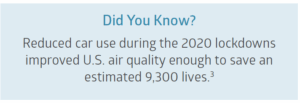
The contrast came into sharp focus during the pandemic. Lockdowns froze much of the global economy, exposing supply chain weakness while also delivering unexpected environmental benefits, from cleaner air and water to quieter oceans.3,4
The U.S. has since leaned into reshoring, encouraging companies to bring production back to domestic soil. Tariffs, subsidies, and industrial incentives are being used to reduce dependence on foreign suppliers and strengthen domestic industry. The goal is stronger supply chains and local jobs, even if it means higher costs.
Globalization’s gains and the costs that follow
Global trade delivered faster innovation and affordable goods while sharply reducing global poverty.5 Standardized shipping containers, introduced by Malcom McLean in 1956, slashed transport costs and accelerated the spread of global commerce.6
But those same connections created fragility. Millions of U.S. manufacturing jobs moved overseas, especially after China joined the World Trade Organization (WTO) in 2001.7 The pandemic highlighted the risk, exposing shortages of semiconductors, medical supplies, and basic goods.8 Geopolitical conflicts have since added strain, from sanctions on Russia to attacks near the Suez Canal.
Shipping, the backbone of global trade, carries environmental costs too. It produces about 3% of global carbon emissions each year, enough to rank as the world’s six-largest emitter if it were a country.9 The 2020 slowdown showed how quickly those impacts can change when trade contracts.
The vulnerabilities often surface as volatility, underscoring the need to diversify exposures across supply chains and regions.
Reshoring promises stability, with trade-offs
What began as a political slogan has become economic strategy. The U.S. is leaning on tariffs, subsidies, and industrial policies to bring production closer to home. For markets, this creates both winners and losers.
The 25% tariff on imported steel and aluminum10 is one example. While designed to reduce dependence on foreign suppliers, it raises costs for manufacturers and, ultimately, consumers. A modeled 25% auto tariff could increase car prices by about 13.5%, or about $6,400 on a new car,11 feeding directly into inflation.
The burden does not fall on the U.S. alone. Many lower-income countries depend on manufacturing jobs to reduce poverty. Reshoring could shift that balance, removing opportunities for millions in exchange for stability at home.
Reshoring does not end globalization, it changes its shape. The balance is moving toward security and away from pure cost efficiency. It makes global diversification and pricing power especially important.
Technology adds a wildcard
Advances in artificial intelligence (AI) may tilt this balance further. These tools can make global networks more adaptive, or reduce the appeal of offshoring by lowering labor costs. At the same time, AI’s productivity gains may ease inflationary pressures, though the benefits are likely to be concentrated in the firms sectors best able to deploy it. Large-cap technology and industrial automation companies, for example, may capture disproportionate value compared to smaller peers.
Market signals to watch
- Equities: Sectors with U.S. exposure and policy support—like semiconductors, clean energy, and logistics—may gain, while multinationals face higher costs.
- Fixed income: Inflation-linked bonds can offer protection if input costs rise, while credit markets may reward companies with strong balance sheets.
- Real assets and private markets: Infrastructure and logistics could stand to benefit, particularly as AI improves efficiency.
Inflation and wealth planning implications
Reshoring’s push for stronger domestic supply is not cost-free. Tariffs and subsidies raise costs, which companies often pass on to consumers. A study by the Federal Reserve Bank of San Francisco found that most of the wealth U.S. households built up early in the pandemic had vanished by late 2022 once inflation was considered.12 Real household net worth has grown only modestly since, despite strong nominal gains.13 Inflation continues to erode purchasing power.
These pressures are already shaping portfolio allocations. Many investors are favoring inflation-sensitive assets such as real estate, commodities, and inflation-linked bonds.14 They’re emphasizing sectors with durable pricing power to help portfolios hold value as higher input costs spread through the economy.
Long-term wealth planning must account for costs that rise faster than income, preserve purchasing power, and align exposures to higher trade and supply expenses. Philanthropic goals face similar choices: commit capital now while dollars stretch further, or preserve flexibility for future needs.
Preparation matters most
Globalization brought decades of growth and efficiency, but also fragility and uneven outcomes. Reshoring aims for stability, though at a higher price. Even small policy shifts in the world’s largest economy can ripple across workers, companies, and consumers worldwide.
The key is not to view globalization or reshoring as absolutes. Portfolios and plans should prepare for a mix of both. They should be positioned for opportunity where policy creates tailwinds, protected against higher costs, and built to weather shifts in markets and policy over generations.
Globalization’s path will keep shifting, sometimes gradually and sometimes abruptly, with technology shaping how costly or adaptive those shifts prove to be. Portfolios built for resilience can thrive whether globalization accelerates or reshoring takes hold.
1Amadeo, K. (2022). “An Annual Review of the U.S. Economy Since 1929.” The Balance.
2Our World in Data. (2021). “World population living in extreme poverty.”
3Arter, He, Holmes, Tull, et al. (2024). “Air Pollution Benefits from Reduced On-Road Activity Due to COVID-19 in the U.S.” PNAS Nexus 3(4).
4BBC News. (29 Apr 2020). “Wild Animals Enjoy Freedom of a Quieter World.”
5World Bank. (2015). “Poverty Headcount Ratio at $2.15 a Day (2017 PPP) (% of Population).” World Development Indicators.
6Blume Global. (2022). “The History and Evolution of the Global Supply Chain.”
7CGTN. (11 Dec 2024). “China’s promotion of economic globalization 23 years after accession to WTO.” CTGN.
8U.S. Intl Trade Commission. (2020). “Impact of the COVID-19 Pandemic on Freight Transportation Services and U.S. Merchandise Imports.”
9International Maritime Organization. (2014). “Third IMO GHG Study 2014.”
10Picchi, A. (10 Feb 2025). “Trump orders 25% tariffs on steel and aluminum.” CBS News.
11The Budget Lab at Yale. (2025). “The Fiscal, Economic, and Distributional Effects of 25% Auto Tariffs.” Yale University.
12Federal Reserve Bank of San Francisco. (Feb 2024). “The Rise and Fall of Pandemic Excess Wealth.” FRBSF Economic Letter.
13Advisor Perspectives. (12 Sept 2025). “Household Net Worth (Q2 2025).” Advisor Perspectives.
14AInvest. (Feb 2025). “Paradox of Wealth: High-Net-Worth Individuals Remain Financially Insecure in an Era of Inflation.”
Recent Insights
Keep Informed
Get the latest News & Insights from the Bailard team delivered to your inbox.