

Reuters: "US software stocks slammed on mounting fears over AI disruption, lose $1 trillion in week"
Dave Harrison Smith, CFA, as source in a recent article published by Reuters.


Economic Brief: A Little Good News
Many years after hanging up his cleats in favor of a guitar, former linebacker Collins Obinna Chibueze still strikes a commanding presence under the bright lights. Standing 6'4", not counting the cowboy hat, the fast-rising singer better known as Shaboozey enjoyed a breakout year in 2024, earning him a “Best New Artist” nomination for last year’s Grammy Awards. The melodious Shaboozey moniker has its own football roots, dating back to when a high school coach slapped the name on his helmet as a phonetic reading of his surname. Shaboozey has been sounding it out ever since, blending country music with elements of hip hop, rock, and other influences. At their best, Shaboozey’s songs are playful and catchy while also introspective and questioning, built atop a bassline of human struggle.
 His smash hit “A Bar Song (Tipsy)” spent 19 weeks as the #1 song on Billboard’s Hot 100 list and tied a record for the longest-running top hit in the chart’s history. It captured a mood that seems to persist today: “Gasoline and groceries, the list goes on and on, This nine-to-five ain’t workin’, why the hell do I work so hard?” That angst reverberates in another popular Shaboozey track called “Good News” that begins: “Man, what a hell of a year it’s been, Keep on bluffin’, but I just can’t win.” Although the song is a personal reflection it contains some deeply plaintive lyrics (“All I really need is a little good news”), which seem to match the melancholy we continue to see in consumer surveys. As one example, the University of Michigan’s Consumer Sentiment Index improved slightly in December yet had slumped ~29% over the past year and stood only marginally higher than its five-year low point—established in mid-2022 when overall U.S. inflation peaked at 9% year-over-year growth.
It was undeniably a doozy of a year in 2025. Bloomberg columnist Clive Crook summarized it nicely: “Over the past 12 months, the U.S. has seen…every norm of economic policy—trade policy, fiscal policy, monetary policy—blithely tossed aside. At the same time, the U.S. economy stands at the bleeding edge of what might be as consequential an economic revolution as the transition from farming to manufacturing, or from manufacturing to services—except that the AI revolution could happen much faster.”1 Besides all that, 2025 was rather uneventful! The jump in economic uncertainty clearly did not dissuade the markets. It was, perhaps, another reminder that the stock market is not the economy. Investors heard sufficient good news to drive equity prices sharply higher for a third straight year. Critically, corporate profits did not disappoint: Standard & Poor’s (S&P) currently estimates that S&P 500 Index operating earnings advanced 13% per-share in 2025. That was the bottom line, but other tailwinds including lower interest rates, AI enthusiasm, and favorable tax policies also helped equities overcome numerous obstacles last year.
Amidst all the policy upheaval and a 43-day U.S. government shutdown—longest in history—investors learned to cope at times with a dearth of information from official government agencies. Beyond minding the information gaps, the August 2025 firing of Dr. Erika McEntarfer, commissioner of the Bureau of Labor Statistics (BLS), cast a shadow across the federal data landscape. Her dismissal immediately followed the Bureau’s July employment report in which the BLS sharply revised down its estimate of jobs added in May and June by a cumulative 258k. Whether or not the administration is correct that the “BLS is broken,” the optics of the decision did not go over well.2 In fact, handing McEntarfer a pink slip via social media hours after a disappointing jobs report may end up sowing more doubt. It prompted the Bloomberg Editorial Board to caution that “In so many words, this tells financial markets that official statistics are no longer to be trusted.”3 The ultimate consequences are unclear for the investment community as 2026 gets underway, but it may encourage decision-makers to rely more heavily on private sector data, where possible. Bloomberg’s Crook suggests that investors may be “flying blind” in an environment of heightened uncertainty and confusion over the state of the economy. For the financial markets, the adage “no news is good news” doesn’t typically apply.
Dot Com Club
A pivot to using more data from the private sector could easily start in Bentonville, Arkansas at Walmart’s global headquarters. The obvious reason: sheer scale. Walmart hauls in roughly 10% of all retail spending in this country, excluding automobiles.4 With around 2.1 million employees across 19 countries worldwide, Walmart amassed a staggering $681 billion of revenue in fiscal 2025—which in Gross Domestic Product (GDP) terms would put Walmart on par with countries such as Argentina and Sweden. Avoiding the company is a logistical challenge: 90% of the U.S. lives within 10 miles of a Walmart store.5 So when Walmart talks, the markets listen. In late November, Walmart reported its third quarter results, posting sales growth of ~6% and closer to a 7% advance for earnings per share (EPS). Perhaps more telling, outgoing CEO Doug McMillon said that U.S. customers and members are “still spending with upper and middle income households driving our growth.”6 McMillon acknowledged that lower income families have been under additional pressure, but also noted that like-for-like Q3 inflation was just 1.3% for Walmart US.
 Technology has helped Walmart keep a lid on prices, consistent with their “Every Day Low Prices” mantra. According to CFO John David Rainey, the company’s supply chain investments have lowered delivery costs by 50% over the last two years. Tech workers now make up around a third of the corporate workforce.7 To compete with Amazon and other tech-forward retailers requires operating with the speed of a technology company. According to Bank of America, Walmart can now deliver within three hours to 95% of American households.8 Walmart has even introduced an artificial intelligence “retail companion” called Sparky on their website to answer product questions, synthesize reviews, and compare options. The focus on digital growth seems to be paying off. Walmart’s e-commerce business is now profitable and U.S. e-commerce sales have grown at >20% year-over-year in 10 of the last 11 quarters.
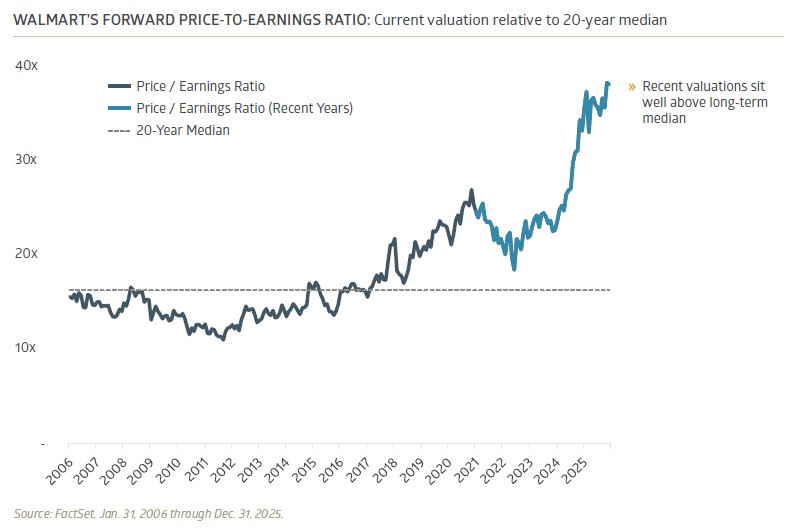
If Walmart as a tech company seems disorienting, consider that the world’s largest retailer just landed on the Nasdaq Stock Market. In December, after trading for over 50 years on the New York Stock Exchange, Walmart’s stock (WMT) migrated to the Nasdaq, joining companies such as Nvidia, Apple, Alphabet, and Microsoft. The exchange of choice for many tech companies, Nasdaq became the first U.S. stock market to trade online back in 1998. Walmart’s share price carries the sheen of a tech stock as well. After rising 23% last year, WMT finished 2025 trading at nearly 38x forward earnings, higher than many of its new Nasdaq peers.
Cold Brew
Although Walmart has managed to keep prices low via some alchemy of scale and technology, the overall inflation picture remains uncertain. Hot spots persist, including some high-profile areas. Electricity prices rose 6.9% year-over-year in November, per the BLS’s Consumer Price Index (CPI).9 Data centers are getting much of the blame, according to The Wall Street Journal, but hurricanes, wildfires, state renewable energy plans, and the replacement of aging or damaged grid equipment are all playing a role.10 California is feeling the pain more acutely than other states: power prices rose 35% inflation-adjusted over the 2019 to 2024 timeframe.
No area is getting more attention than health insurance costs. With the expiration of federal tax credits, the 24 million people that enrolled in coverage last year under the Affordable Care Act (ACA) will see their premiums increase significantly. San Francisco-based health policy organization KFF estimated that premium payments will more than double.11 For those covered under Medicare Part B, the 2026 standard monthly premium is going up nearly 10%. Employer-based health insurance is not immune, either. Mercer projects a total health benefit cost increase of 6.7% this year, pushing the average cost above $18,500 per employee.12 In 2025, Mercer’s annual survey found that the average cost of employer-sponsored health insurance rose 6%, driven in part by sharp growth in prescription drug spending with more companies including GLP-1 coverage.
 At risk of burying the lead, though, coffee prices have been surging higher. For the many Americans who require a caffeine infusion to successfully back out of the garage each morning, this is a problem. Coffee prices soared 19% year-over-year, according to the November CPI report, and the restaurant point-of-sale company Toast calculates that the median price of a regular cup of coffee is about 20% higher than it was in early 2023.13 This has consumers trading down: cutting back on trips to the coffee shop and home-brewing instead. We can’t risk a caffeine crisis if this economy is to keep rolling.
Through all the noise, geopolitical tumult, and incertitude, Wall Street is uniformly optimistic. In fact, a year-end Bloomberg News survey found that all 21 strategists estimate the S&P 500 Index will post a fourth consecutive positive year in 2026.14 Wall Street analysts are estimating another strong year for corporate profits, as well, with S&P 500 earnings per share expected to increase by 14.8% on top of 2025’s already strong earnings growth.15 Again, the stock market is not the economy, but it does beg the question of whether everybody is gettin’ tipsy, to paraphrase Shaboozey. Another year of rising profits would certainly qualify as a little good news.
# # #
1 “Investors Are Flying Blind Into the ‘Golden Age,’ www.bloomberg.com, 12/26/2025.
2 “BLS Revisions Show President Trump Was Right – Again,” www.whitehouse.gov, 9/9/2025.
3 “Trusted Data Is a Vital Economic Asset,” www.bloomberg.com, 8/15/2025.
4 “How Walmart became a tech giant – and took over the world,” www.economist.com, 5/15/2025.
5 “Walmart, Inc.: Morgan Stanley Global Consumer & Retail Conference,” www.walmart.com, 12/2/2025.
6 “Walmart Inc. Q3 2026 Earnings Call,” www.walmart.com, 11/20/2025.
7 “Can Walmart Shed Its Discount Vibe?” www.nytimes.com, 6/23/2025.
8 “Heard on the Street: Should Walmart Really Be Trading Like a Tech Company?” www.wsj.com, 12/6/2025.
9 “Consumer Price Index for All Urban Consumers (CPI-U), Table 7,” www.bls.gov, 12/18/2025.
10 “Be Prepared to Keep Paying More for Electricity,” www.wsj.com, 12/29/2025.
11 “ACA Marketplace Premium Payments Would More than Double on Average Next Year if Enhanced Premium Tax Credits Expire,” www.kff.org, 9/30/2025.
12 “Mercer survey finds US employers and workers will face affordability crunch as health insurance cost is expected to exceed $18,500 per employee in 2026,” www.mercer.com, 11/18/2025.
13 “High Coffee Prices Are Changing How Consumers Take Their Daily Brew,” www.bloomberg.com, 12/16/2025.
14 “Every Wall Street Analyst Now Predicts a Stock Rally in 2026,” www.bloomberg.com, 12/29/2025.
15 FactSet, EPS One-Year Growth (%) estimated for year-end 2026, data retrieved 1/8/2026.
Specific investments described herein do not represent all investment decisions made by Bailard. The reader should not assume that investment decisions identified and discussed were or will be profitable. Specific investment advice references provided herein are for illustrative purposes only and are not necessarily representative of investments that will be made in the future.


Kiplinger: "This Is Why Now Is the Time for Investors to Look Abroad"
Many portfolios today lean heavily toward the same handful of U.S. names. What happens when those leaders start to wobble? In Kiplinger, Bailard’s Daniel McKellar, CFA, explores why international equities deserve a closer look and how investors can think more globally about diversification.

Kiplinger: "This Is Why Now Is the Time for Investors to Look Abroad"
Many portfolios today lean heavily toward the same handful of U.S. names. What happens when those leaders start to wobble? In Kiplinger, Bailard’s Daniel McKellar, CFA, explores why international equities deserve a closer look and how investors can think more globally about diversification.

Economic Brief: Gold Rush
From gold to gigabytes, Jon Manchester, CFA, CFP® (Chief Strategist, Wealth Management) draws a line from California’s first gold rush to today’s race for artificial intelligence, exploring the optimism, risk, and reinvention that come with every new boom.
From its very beginning, California has attracted dreamers and schemers. In early February 1848, the Mexican-American War concluded, with Mexico ceding the territory of Alta California along with Texas and other parts of the west. In exchange, the U.S. paid $15 million and forgave $3.25 million of debt. Just over a week prior to that formative event in our nation’s history, an itinerant carpenter named James Marshall had discovered gold in Coloma, CA, as he endeavored to build a sawmill for the landowner, John Sutter. Word of Marshall’s find quickly spread—at least by mid-19th-century communication speeds—kicking off a mad scramble to this new land of opportunity. In The Age of Gold, author H.W. Brands characterized the Forty-Niners: “All sought wealth; nearly all sought adventure too. The news from California was the most exciting most of them had ever heard; the rush to California promised to be the event of their lifetime. Like little boys hurrying to greet the circus, to catch a glimpse of the mighty elephant, the emigrants of 1849 couldn’t bear to miss out – and in fact the phrase ‘to see the elephant’ became a cliché on the trail.”1
In a sense, that fear of missing out continues to typify those who travel long distances to try their luck in the Golden State. The elephant has evolved over time. The birth of the semiconductor industry gave way to the dot-com craze and then the rise of social media. Today, artificial intelligence (AI) is the glittery object which has a new generation of dreamers affixing “California or Bust” bumper stickers to their (probably electric) wagons. It is the singularly dominant theme in capital markets, with vast and seemingly ever-growing tentacles across disparate industries.
During the gold rush, demand for clipper ships exploded as prospectors sought to find quick passage to San Francisco Bay. Similarly, AI is creating enormous demand for an ecosystem of adjacent businesses providing infrastructure to support the buildout. Spending continues to spike on data centers and for the power required to run those facilities. Brookfield Asset Management estimates that ultimately around $7 trillion will be needed to finance the growth of AI.2 The so-called hyperscalers—Microsoft, Amazon, Alphabet, and Meta Platforms—are projected to outlay roughly $340 billion on capital expenditures this year, increasing to $400 billion in 2026.3 BlackRock, the world’s largest asset manager, formed an AI partnership last year to raise $100 billion with the intent to invest in data centers, joining a crowded field with big players including Apollo, Blackstone, and many others hoping to strike a vein of digital gold.
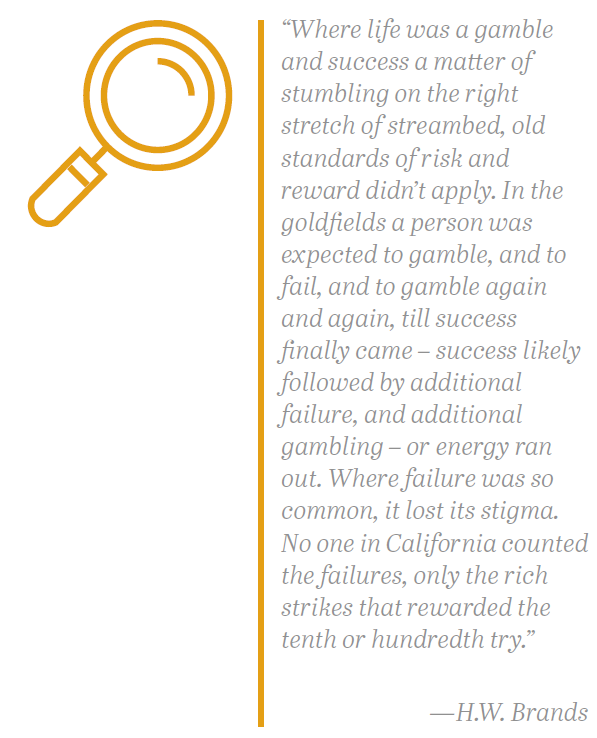
This “build it and they will come” approach takes a certain boldness, a disregard for potential failure. Brands described the same mindset as occurring during the gold rush: “Where life was a gamble and success a matter of stumbling on the right stretch of streambed, old standards of risk and reward didn’t apply. In the goldfields a person was expected to gamble, and to fail, and to gamble again and again, till success finally came – success likely followed by additional failure, and additional gambling – or energy ran out. Where failure was so common, it lost its stigma. No one in California counted the failures, only the rich strikes that rewarded the tenth or hundredth try.”4
It seems likely that failure will eventually follow for some amidst this tidal wave of AI expenditures: buy now, pay later? Hedge fund manager David Einhorn cautioned recently that “there’s a reasonable chance that a tremendous amount of capital destruction is going to come through this cycle.”5 Amazon founder Jeff Bezos acknowledged that AI spending resembles an “industrial bubble” in which “investors have a hard time in the middle of this excitement distinguishing between the good ideas and the bad ideas.”6 However, he also thinks “the benefits to society from AI are going to be gigantic.” Beyond the bubble worries, there is some uneasiness around the financing of all of these projects, with large tech companies increasingly relying on debt.
While we impatiently wait for AI to pan out, the markets continue to handsomely reward the companies in the fight. According to JPMorgan strategist Michael Cembalest: “AI related stocks have accounted for 75% of S&P 500 returns, 80% of earnings growth and 90% of capital spending since ChatGPT launched in November 2022.”7 OpenAI, the owner of ChatGPT, is not publicly traded, but its private market valuation has soared to a reported $500 billion. Bloomberg notes that ChatGPT has about 700 million weekly users—making it one of the fastest-growing consumer products in history.8
What’s Old is New Again
A funny thing happened on the way to coronate our new AI ruling class, though. Investors have once again developed a gold crush. In fact, the price of the alluring metal—which has captured imaginations for thousands of years—outpaced the stock market over the trailing three years, roughly since ChatGPT launched. The following page’s exhibit shows that gold soared 133% over that timeframe, ahead of the S&P 500 Index’s 95% total return. Not typically mistaken for a growth stock, it has been a goldilocks environment for the yellow metal. The Consumer Price Index (CPI) hit a peak of 9.0% year-over-year inflation in mid-2022, highest in over 40 years. This pushed some investors into gold as a store of value, or a way to avoid a loss of purchasing power. Inflation has normalized since, decelerating to 2.9% growth as of August 2025, but it has not reversed, which means prices continue to climb overall.
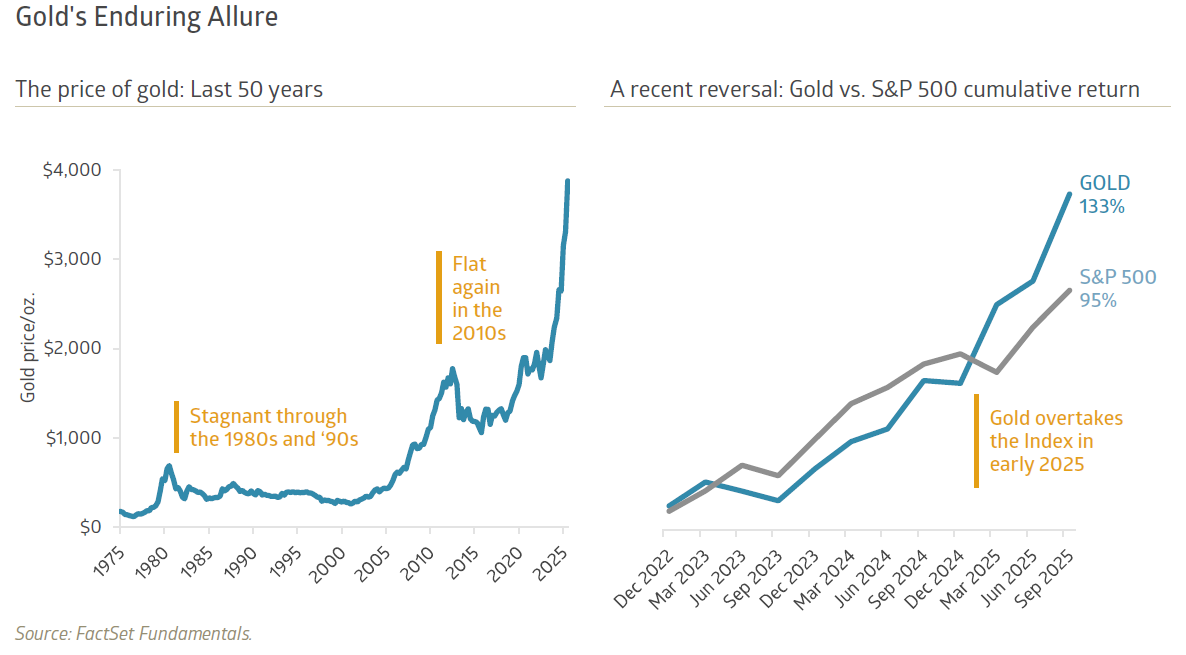 Meanwhile, rising concerns around unsustainable government debt levels have also weighed on the U.S. dollar, further exacerbated by a Federal Reserve monetary easing cycle which began a year ago. Lower short-term interest rates usually result in softening demand for the greenback. The Fed funds target rate of 4.25% remains well above what is considered a neutral rate, where monetary policy is neither expansionary nor contractionary. However, the Fed expects to keep easing, with the latest “dot plot” indicating a median estimate of 3.4% for year-end 2026. For gold bugs, the direction of monetary policy might be more important than the absolute level, providing further support to the futures price. With the inflation bogeyman still lingering offstage, any whiffs of accelerating inflation (due to tariffs, Fed easing, etc.) can extend the stay for gold.
A further catalyst for gold’s relentless rise has been motivated buyers in the form of other central banks looking to diversify reserves. China’s central bank has been an aggressive buyer since 2023, according to Reuters, aiming to reduce its reliance on the U.S. dollar. Despite China’s buying spree, its gold position is currently smaller than five other countries, plus the International Monetary Fund, and accounts for just seven percent of China’s total reserves.9 Whether central banks will keep buying with gold near $4,000 per ounce is a viable question, but their concerted efforts to stockpile gold has clearly underpinned the bullion market.
Expense Card
The stock market’s brief April 2025 foray into bear market territory (>20% decline) now seems a distant memory. Tariffs remain a risk to profitability, but corporations have thus far largely managed to defray or offset the additional costs. Favorable tax policies outside of the trade realm clearly continue to help. The 2017 Tax Cuts and Jobs Act reduced the corporate tax rate from a high of 35% to a flat 21%, while this year’s One Big Beautiful Bill Act (OBBBA) permanently restored the ability for corporations to immediately expense domestic research and development (R&D) costs and returned to 100% deduction on qualifying business expenses, such as new computers, machinery, or other equipment.
According to Standard & Poor’s, the S&P 500 operating margin was 12.5% in the second quarter, its highest since 2021. Operating profits per share rose nearly 10% year-over-year in Q2 and growth is projected to accelerate to the 13% to 14% range over the final two quarters of 2025. Resilient corporate earnings growth and solid economic activity have taken recession odds sharply lower. The Bureau of Economic Analysis (BEA) recently revised up its Q2 Gross Domestic Product (GDP) growth estimate to 3.8% inflation-adjusted, a rebound from a small first quarter decline. Nonresidential fixed investment jumped 7.3%, buoyed by strong AI-related equipment spending. The U.S. consumer also did its part, propelled by high earners. Moody’s Analytics chief economist Mark Zandi calculated that the top ten percent of income earners now account for just over 49% of total expenditures – highest since 1989.10
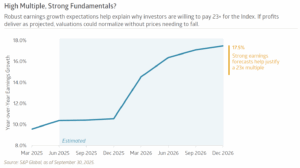
What remains is a fully priced U.S. large-cap equity market. The S&P 500 entered the final quarter of 2025 trading at nearly 23x estimated earnings over the next 12 months. Fed Chair Jerome Powell acknowledged as much in a late September speech: “…by many measures, for example, equity prices are fairly highly valued.” Investors seem willing to pay the price, however, emboldened by both the long-term promise of AI and rosy estimates for near-term earnings growth. S&P tabulates that S&P 500 earnings per share growth for 2026 is currently tracking at more than 17%. It could prove overly optimistic, but it does help explain why valuations are rich in an environment where the Fed is also cutting interest rates. Valuations remain much more restrained outside of the tech-heavy S&P 500 Index, with smaller company stocks and foreign equities relatively attractive.
Plenty of hurdles remain. We’re keeping a close eye on debt, whether at the federal, corporate, or individual levels. There will no doubt be those that misprice or underestimate risk and lose it all in a futile attempt to catch a glimpse of the mighty elephant. Buyer beware; yet remember that investing involves calculated risk.

Globalization, Reshoring, and the Cost of Stability
This quarter, Bailard’s SRII team looks at the forces reshaping global trade ,the costs that follow, and what these shifts might mean for investors.
Globalization and reshoring are pulling in different directions, yet both are shaping the future. One expanded U.S. GDP more than eightfold since 1950,1 lowered costs for consumers, and lifted millions worldwide out of poverty.2 The latter, however, left supply chains exposed to shocks from health crises, geopolitical tensions, and other global disruptions.
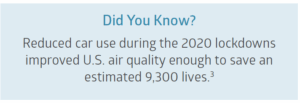
The contrast came into sharp focus during the pandemic. Lockdowns froze much of the global economy, exposing supply chain weakness while also delivering unexpected environmental benefits, from cleaner air and water to quieter oceans.3,4
The U.S. has since leaned into reshoring, encouraging companies to bring production back to domestic soil. Tariffs, subsidies, and industrial incentives are being used to reduce dependence on foreign suppliers and strengthen domestic industry. The goal is stronger supply chains and local jobs, even if it means higher costs.
Globalization’s gains and the costs that follow
Global trade delivered faster innovation and affordable goods while sharply reducing global poverty.5 Standardized shipping containers, introduced by Malcom McLean in 1956, slashed transport costs and accelerated the spread of global commerce.6
But those same connections created fragility. Millions of U.S. manufacturing jobs moved overseas, especially after China joined the World Trade Organization (WTO) in 2001.7 The pandemic highlighted the risk, exposing shortages of semiconductors, medical supplies, and basic goods.8 Geopolitical conflicts have since added strain, from sanctions on Russia to attacks near the Suez Canal.
Shipping, the backbone of global trade, carries environmental costs too. It produces about 3% of global carbon emissions each year, enough to rank as the world’s six-largest emitter if it were a country.9 The 2020 slowdown showed how quickly those impacts can change when trade contracts.
The vulnerabilities often surface as volatility, underscoring the need to diversify exposures across supply chains and regions.
Reshoring promises stability, with trade-offs
What began as a political slogan has become economic strategy. The U.S. is leaning on tariffs, subsidies, and industrial policies to bring production closer to home. For markets, this creates both winners and losers.
The 25% tariff on imported steel and aluminum10 is one example. While designed to reduce dependence on foreign suppliers, it raises costs for manufacturers and, ultimately, consumers. A modeled 25% auto tariff could increase car prices by about 13.5%, or about $6,400 on a new car,11 feeding directly into inflation.
The burden does not fall on the U.S. alone. Many lower-income countries depend on manufacturing jobs to reduce poverty. Reshoring could shift that balance, removing opportunities for millions in exchange for stability at home.
Reshoring does not end globalization, it changes its shape. The balance is moving toward security and away from pure cost efficiency. It makes global diversification and pricing power especially important.
Technology adds a wildcard
Advances in artificial intelligence (AI) may tilt this balance further. These tools can make global networks more adaptive, or reduce the appeal of offshoring by lowering labor costs. At the same time, AI’s productivity gains may ease inflationary pressures, though the benefits are likely to be concentrated in the firms sectors best able to deploy it. Large-cap technology and industrial automation companies, for example, may capture disproportionate value compared to smaller peers.
Market signals to watch
- Equities: Sectors with U.S. exposure and policy support—like semiconductors, clean energy, and logistics—may gain, while multinationals face higher costs.
- Fixed income: Inflation-linked bonds can offer protection if input costs rise, while credit markets may reward companies with strong balance sheets.
- Real assets and private markets: Infrastructure and logistics could stand to benefit, particularly as AI improves efficiency.
Inflation and wealth planning implications
Reshoring’s push for stronger domestic supply is not cost-free. Tariffs and subsidies raise costs, which companies often pass on to consumers. A study by the Federal Reserve Bank of San Francisco found that most of the wealth U.S. households built up early in the pandemic had vanished by late 2022 once inflation was considered.12 Real household net worth has grown only modestly since, despite strong nominal gains.13 Inflation continues to erode purchasing power.
These pressures are already shaping portfolio allocations. Many investors are favoring inflation-sensitive assets such as real estate, commodities, and inflation-linked bonds.14 They’re emphasizing sectors with durable pricing power to help portfolios hold value as higher input costs spread through the economy.
Long-term wealth planning must account for costs that rise faster than income, preserve purchasing power, and align exposures to higher trade and supply expenses. Philanthropic goals face similar choices: commit capital now while dollars stretch further, or preserve flexibility for future needs.
Preparation matters most
Globalization brought decades of growth and efficiency, but also fragility and uneven outcomes. Reshoring aims for stability, though at a higher price. Even small policy shifts in the world’s largest economy can ripple across workers, companies, and consumers worldwide.
The key is not to view globalization or reshoring as absolutes. Portfolios and plans should prepare for a mix of both. They should be positioned for opportunity where policy creates tailwinds, protected against higher costs, and built to weather shifts in markets and policy over generations.
Globalization’s path will keep shifting, sometimes gradually and sometimes abruptly, with technology shaping how costly or adaptive those shifts prove to be. Portfolios built for resilience can thrive whether globalization accelerates or reshoring takes hold.
1Amadeo, K. (2022). “An Annual Review of the U.S. Economy Since 1929.” The Balance.
2Our World in Data. (2021). “World population living in extreme poverty.”
3Arter, He, Holmes, Tull, et al. (2024). “Air Pollution Benefits from Reduced On-Road Activity Due to COVID-19 in the U.S.” PNAS Nexus 3(4).
4BBC News. (29 Apr 2020). “Wild Animals Enjoy Freedom of a Quieter World.”
5World Bank. (2015). “Poverty Headcount Ratio at $2.15 a Day (2017 PPP) (% of Population).” World Development Indicators.
6Blume Global. (2022). “The History and Evolution of the Global Supply Chain.”
7CGTN. (11 Dec 2024). “China’s promotion of economic globalization 23 years after accession to WTO.” CTGN.
8U.S. Intl Trade Commission. (2020). “Impact of the COVID-19 Pandemic on Freight Transportation Services and U.S. Merchandise Imports.”
9International Maritime Organization. (2014). “Third IMO GHG Study 2014.”
10Picchi, A. (10 Feb 2025). “Trump orders 25% tariffs on steel and aluminum.” CBS News.
11The Budget Lab at Yale. (2025). “The Fiscal, Economic, and Distributional Effects of 25% Auto Tariffs.” Yale University.
12Federal Reserve Bank of San Francisco. (Feb 2024). “The Rise and Fall of Pandemic Excess Wealth.” FRBSF Economic Letter.
13Advisor Perspectives. (12 Sept 2025). “Household Net Worth (Q2 2025).” Advisor Perspectives.
14AInvest. (Feb 2025). “Paradox of Wealth: High-Net-Worth Individuals Remain Financially Insecure in an Era of Inflation.”


Year-End Planning in a New Tax Landscape
Bailard’s financial planning and tax strategy teams help make sense of the One Big Beautiful Bill Act, so you can plan confidently for what lies ahead.*
As 2025 comes to a close…
Year-end planning takes on added importance with the passage of the One Big Beautiful Bill Act (OBBBA). This sweeping legislation brings both clarity and complexity to the tax landscape, introducing notable changes while leaving other familiar provisions intact. With some rules already in effect and others beginning in 2026, now is the time to take stock and ensure your financial plan remains well positioned.
Here’s a high-level overview of what’s changed—and what hasn’t—under the OBBBA, in three timely themes to consider before December 31:
- Accelerate charitable giving
- Leverage the expanded SALT deduction
- Consider Roth conversions
1) Accelerate charitable giving before the new AGI floor
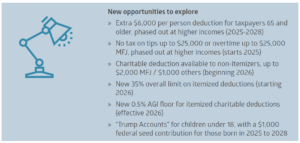
For many families, charitable giving is both a personal priority and a key planning tool. Beginning in 2026, charitable contributions for those who itemize deductions will only be deductible to the extent they exceed 0.5% of adjusted gross income (AGI).
While that may sound modest, it adds another hurdle for higher earners who regularly itemize. The good news: for 2025, gifts remain fully deductible up to current limits without the AGI floor. That makes this year a smart time to “lump” several years’ of donations into 2025. Doing so can help maximize deductions under today’s rules and reduce taxable income more effectively than spreading gifts across future years.
A donor advised fund (DAF) can make this easier. It allows you to make a larger, deductible contribution now while granting to charities gradually over time.
» Here’s how it works:
A high-income earner with $1,000,000 of AGI who typically donates $50,000 each year will, starting in 2026, only be able to deduct the portion exceeding $5,000 (0.5% of AGI). Their $50,000 annual gift would yield only a $45,000 deduction going forward.
By instead contributing three years’ worth of giving ($150,000) to a DAF in 2025, they can take the full deduction this year—without the AGI floor—and still direct $50,000 per year to their chosen causes. They’ve captured a larger deduction upfront, and likely lowered their 2025 tax bill in a meaningful way.
While itemizers face the new AGI floor starting in 2026, non-itemizers will gain a new opportunity to deduct up to $1,000 ($2,000 for married couples filing jointly, or MFJ) of charitable giving on cash contributions. Donations to a DAF or private foundation will not be eligible for this new deduction. It’s a small but welcome benefit for those who take the standard deduction.

2) Leverage the expanded state and local taxes (SALT) deduction
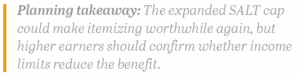
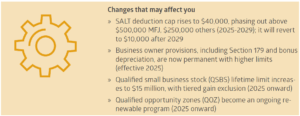
One of the more notable OBBBA provisions is the temporary expansion of the state and local tax deduction cap. For tax years 2025 through 2029, the cap increases from $10,000 to $40,000 for both single and joint filers who itemize.
However, this benefit begins to phase out at $500,000 of AGI and fully reverts to the $10,000 limit once income reaches $600,000 or more. After 2029, the $10,000 cap returns unless further legislation is passed.
The higher SALT cap could make itemizing more attractive, especially for those living in high-tax states with sizable income and property tax bills. But it’s not just high earners who should take notice. Many households have defaulted to taking the standard deduction in recent years (currently $15,750 for single filers and $31,500 for MFJ), yet the higher SALT limit could make itemizing worthwhile again.
» Planning strategies if you’re near the phaseout:
If your income falls near the $500,000 to $600,000 phaseout range, there are ways to remain eligible for the full deduction this year and beyond:
- Defer income such as bonuses or business earnings into the following year
- Maximize pre-tax contributions to 401(k), 403(b), HSA, and similar employer retirement plans
- Use qualified charitable distributions (QCDs) if you’re subject to required minimum distributions (RMDs). QCDs allow you to donate up to $108,000 per year directly from an IRA to a qualified charity, satisfying all or part of your RMD while reducing AGI
3) Consider Roth conversions wile rates remain low
While the OBBBA makes today’s tax brackets “permanent,” that doesn’t mean they’ll stay that way. For now, rates remain historically low, offering an opportunity for proactive long-term tax planning.
For individuals with significant pre-tax retirement savings in traditional IRAs or 401(k)s, Roth conversions can be a powerful way to manage future taxes. RMDs can substantially increase taxable income once they begin, potentially pushing retirees into higher tax brackets, even under current rates.
The years between retirement and the start of RMDs or Social Security often present a valuable window. Many retirees fall into a lower tax bracket than during their working years, or after RMDs begin. That gap creates an opportunity to convert pre-tax retirement assets to Roth accounts, recognizing income at lower rates now to avoid higher rates later.
» Why Roth conversions can help:
- Qualified Roth withdrawals are tax-free in retirement
- Roth accounts aren’t subject to future RMDs, which allows longer tax-free growth
- Conversions may help offset potential tax increases after 2025, particularly for those expecting higher future income or estate tax exposure
If you’re nearing retirement or already retired but not yet taking Social Security or RMDs, consider whether a Roth conversion makes sense. Today’s low tax rates won’t last indefinitely, and acting now could make a lasting difference over time. Taking time to plan ahead now can make future withdrawals, and your overall tax picture, far more manageable.

Let’s make the most of 2025’s planning opportunities
The OBBBA has ushered in both new opportunities and new complexities in tax planning. Perhaps the clearest takeaway is this: AGI matters more than ever. From the new charitable giving floor to the expanded SALT deduction, many of the law’s most impactful provisions hinge directly on income thresholds.
That makes 2025 a pivotal year to manage income and deductions with care. Coordinating charitable giving, income timing, and retirement strategies can help keep your plan aligned with your goals while maintaining flexibility for what’s ahead.
Every household’s situation is unique, but preparation and foresight go a long way. A steady approach, informed by thoughtful planning, can help you feel confident that you’re well-positioned for what’s ahead.
Let’s talk.
OBBBA Snapshot: What’s changed and what’s new?

* Neither Bailard nor any employee of Bailard can give tax or legal advice. Please consult your tax or legal professional for such advice.

What Matters Most Hasn’t Changed
Editor’s Note: We’re proud to share this piece from Dave, who took the reins as Bailard’s Chief Investment Officer (CIO) on July 1, succeeding Eric Leve, CFA. With clear-eyed perspective and deep respect for what endures, he reflects on what this role means to him and how he plans to build on the firm’s strong foundation.
When I joined Bailard in 2009 as a Client Associate, I didn’t fully know what path I was setting out on. But I knew I had landed somewhere special. The role gave me a front-row seat at the intersection of research and relationships. I wasn’t just learning how the investment market works, I was learning how to make it work for real people. I was immediately drawn to Bailard’s entrepreneurial spirit and culture of shared ideas.
Over time, I gravitated toward technology investing. The pace of change and complexity captivated me, and I enjoyed the intellectual challenge of separating hype from substance. I’ve spent most of the last decade immersed in tech: first as an analyst, then a co-portfolio manager, and ultimately leading our tech strategies.
In 2021, I was promoted to Executive Vice President and began working more closely with Eric Leve, our longtime CIO. That shift didn’t take me away from research, which I still love. Instead, it gave me a broader view of our investment platform. Eric’s mentorship during this time was invaluable. As I move into the CIO role, I do so with deep appreciation for Bailard’s enduring approach and a clear understanding of what remains essential to our philosophy.
Eric has dedicated 38 years to Bailard, helping shape how we invest and playing a meaningful role in many careers. While he’s stepping back from firmwide leadership, he continues to co-manage our international portfolios. It’s a well-earned change in his career, one that reflects not just personal longevity, but the strength and depth of the firm. As our CEO, Sonya Mughal, has shared, “Careers like Eric’s don’t happen by chance. They reflect the kind of culture we’ve built at Bailard, one rooted in shared purpose where people grow and stay for all the right reasons.” Many colleagues have dedicated their professional lives here, serving clients across decades and market cycles. That kind of continuity matters.
Transitions like this are meaningful, but they don’t require a shift in philosophy. Bailard has long invested with patience, rigor, and purpose—and that won’t change. We’ll still rely on deep research and shared insight, guided by the trust clients place in us. We’ll be opportunistic when it makes sense and patient when it doesn’t.
In this new role, I bring energy and focus, with a commitment to exploring new ideas, embracing innovation, and helping ensure client portfolios are positioned for both today and tomorrow. We have a strong team in place. My job is to support them, challenge them, and help them thrive.
Peter Hill, who served as both CIO and later CEO of Bailard, was known for saying, “Always hire someone smarter than yourself.” It’s a philosophy I’ve carried with me, and one that feels especially true when I look around the table. Working with such capable and focused colleagues raises the standard in the best possible way. It’s what keeps this job both humbling and rewarding.
This transition isn’t about change for its own sake. It’s about building steadily on what works, with both continuity and care, all in the same spirit that has long defined our work. I’m grateful for the foundation that’s been laid, and for the chance to carry forward what matters most.
Thank you for your continued trust in Bailard. I’m honored to serve you in this role.

GRATs: An Unexpected Bridge to Philanthropy
Our Director of Estate Strategy, Dave Jones, JD, LLM, CFP®, shares how a Grantor Retained Annuity Trust (GRAT) can offer peace of mind for family priorities, and open the door to charitable giving.
When most people hear about GRATs, they often picture billionaires using clever legal structures to dodge estate taxes. Headlines tend to frame them as loopholes for the ultra-wealthy. And yes, GRATs are best suited to individuals with substantial wealth and highly appreciating assets. But that view misses a more human, and far more common, story.
In thoughtful wealth planning, GRATs often serve a deeper purpose. They’re not just tax tools. They’re emotional bridges. For many clients, GRATs help meet near-term family priorities, ease internal concerns, and unlock a broader vision—one that may include charitable giving.
Meeting Family Needs First: The Quiet Prerequisite to Charitable Giving
Even among those with the means and potential to be transformative givers, philanthropy isn’t always the first thing on their minds. It’s not a lack of generosity. Their focus is elsewhere: on family.
There’s a quiet, internal preoccupation with unresolved family needs:
- Have I provided enough for my children’s long-term security and opportunities?
- Should I make a gift now to support my sibling if they ever face unexpected needs?
- Should I set aside resources to support my grandchildren’s future before committing to a significant charitable gift?
These are not fleeting concerns. They carry real emotional weight that can keep clients anchored in the present. Even when there’s a genuine desire to give back, that intention often sits on the sidelines until family support feels complete.
 In many cases, clients aren’t actively weighing charitable plans against family obligations. Philanthropy just doesn’t fully enter the picture until they feel settled, both financially and emotionally, about what they’re doing for loved ones. GRATs can be a surprisingly effective way to address this internal tension.
GRATs in Action: Meeting Family Needs Without Sacrificing Flexibility
A GRAT allows a person to transfer appreciating assets into a trust, retain annuity payments over a set term, and pass the remaining appreciation to beneficiaries—often family members—with minimal or no tax consequences.
GRATs work especially well for individuals with taxable estates and concentrated positions in high-growth assets, such as closely held business interests or technology stocks. These assets are ideal because even modest growth above the IRS’s assumed interest rate (the Section 7520 rate) can result in meaningful transfers outside the taxable estate.
The benefit? Clients can in many cases provide significant support for family in the near-term without needing to sell assets or tie up large amounts of cash. With that foundation in place, space can open up for longer-term goals and values-driven planning.
How GRATs Can Support Family and Philanthropy
Samantha’s story presents a hypothetical situation based on common planning scenarios; for illustrative purposes only.
Consider Samantha, a successful tech entrepreneur who built significant wealth through her company’s growth and early investments in the innovation economy. She has three adult children, two brothers, and several nieces and nephews pursuing college and professional educations. She also wanted to support first-generation college students and fund early-stage cancer research.
In many families, loved ones have different levels of comfort with giving. GRATs can help align those perspectives by addressing near-term family needs and making room for future generosity.
Despite her financial capacity, Samantha hesitated. She wanted to give roughly $5 million to each of her children, $3 million to each of her brothers, and $2 million to nieces and nephews—a total of $23 million in near-term support that would give her peace of mind. Even with the higher lifetime exemption of $15 million starting in 2026, making all of these gifts outright would trigger significant gift tax liabilities.
Working with her advisors, Samantha established a series of short-term rolling GRATs, funded with a concentrated position in a fast-growing tech stock. The GRAT structure allowed the assets’ appreciation to pass efficiently to her family with minimal tax exposure, preserving her broader financial plan.
Once her family support strategy was in place and successful, Samantha felt an emotional shift. She moved forward with a $10 million scholarship endowment and helped launch a cancer research institute—initiatives she had long intended to pursue but had put on hold.
The GRATs didn’t change her values. They simply gave her the peace of mind to act on them.
The Real Role of GRATs in Philanthropy
Despite their reputation as technical estate planning vehicles, GRATs can play a more personal role:
- They remove emotional barriers that quietly delay charitable giving
- They allow clients to support family without disrupting broader financial plans
- They provide structure and tax-efficiency, which in turn brings clarity and confidence
They aren’t the only option. Some clients choose to integrate other strategies to achieve their family and charitable goals. But in the right situations, GRATs can do more than simply transfer wealth or minimize taxes. They help clients move from uncertainty to purposeful action.
Planning With Purpose
GRATs aren’t magic. They must be carefully designed to comply with IRS rules and depend on performance of underlying assets. But when aligned with broader goals, they become more than just technical tools. They become bridges between questions and clarity, between responsibility and impact.
For many families, generosity begins with a simple question: have I done enough for the people I love?
In the hands of thoughtful clients and advisors, GRATs help answer that question. Once in place and successful, clients may find they’re ready to move beyond family giving.
And that’s what makes GRATs not just a tax strategy, but a meaningful bridge between stewardship and lasting impact.
Important: The above does not take into account the particular investment objectives, financial situations, or needs of individual clients. Neither Bailard nor any employee of Bailard can give tax or legal advice. The contents of this document should not be construed as, and should not be relied upon for, tax or legal advice.

CNBC: "Tech IPO hype gets drowned out on Wall Street by prospect of $1 trillion in debt sales"
Dave Harrison Smith, CFA, as source in a recent article published by CNBC.